
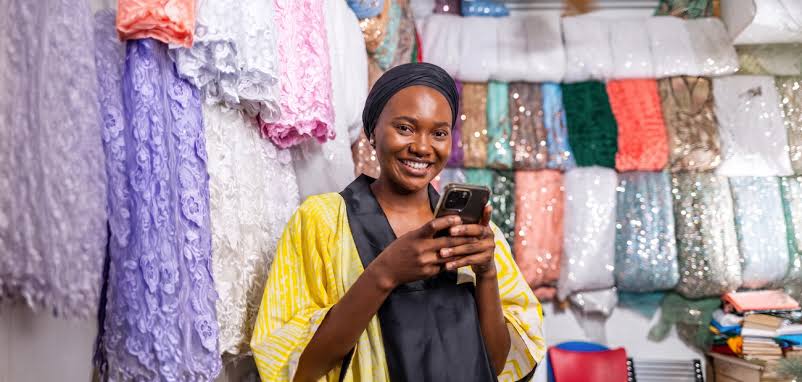
Across Africa, women entrepreneurs are a powerful driving force behind economic growth. They create jobs, build innovative businesses and contribute to the transformation of their communities. Yet, despite their growing economic influence, many continue to face one major obstacle: limited access to finance.
In response to this challenge, AXIAN Group and the African Development Bank (AfDB) have joined forces to launch an ambitious financial inclusion programme targeting more than 34,000 women-led businesses across five African countries.
By leveraging mobile money, digital lending solutions and alternative credit assessment systems, the initiative aims to reach women who have traditionally been underserved by conventional financial institutions.
Beyond the numbers, this programme sends an important message: investing in women means investing in Africa’s economic future.
Financing African Women Entrepreneurs: AXIAN and AfDB Take Action
Access to finance remains one of the most significant barriers facing women entrepreneurs across the African continent. Although women play an increasingly important role in economic development, many still struggle to secure the financial resources needed to grow their businesses.
High collateral requirements, complex administrative procedures and limited credit histories continue to prevent thousands of women from accessing traditional banking services.
This is precisely the challenge that AXIAN and the African Development Bank seek to address through their new programme.
The objective is clear: to expand access to financial services for more than 34,000 businesses led by women across five African countries.
The initiative builds on two major international financing mechanisms:
- AFAWA (Affirmative Finance Action for Women in Africa): An African Development Bank initiative designed to improve access to finance for women entrepreneurs across the continent.
- We-Fi (Women Entrepreneurs Finance Initiative): An international initiative focused on expanding financing opportunities and supporting the growth of women-led businesses.
More than a financial programme, this partnership represents a commitment to ensuring that women’s entrepreneurial potential is no longer held back by an inadequate financial system.
Mobile Money and Digital Lending: Opening New Doors to Financial Empowerment
One of the programme’s key features is its use of financial technology to reach women who remain excluded from conventional banking services.
Mobile money, digital lending solutions and alternative credit risk assessment systems are among the main tools supporting this strategy.
Mobile Money: Bringing Financial Services Closer to Women
Mobile financial services can help women manage their business transactions, track their income and gain greater access to the formal financial ecosystem.
For an entrepreneur operating in a rural or underserved area with limited access to banking institutions, mobile money can provide an additional opportunity to manage business activities and access financial services.
Digital Lending: Making Financing More Accessible
Digital lending solutions can also simplify certain financing procedures.
Through digital platforms, entrepreneurs may gain access to credit through streamlined processes and potentially more flexible arrangements than those offered by traditional financial institutions.
Rethinking How Women’s Businesses Are Assessed
The programme also relies on alternative credit risk assessment systems.
This approach is particularly relevant for women who run viable businesses but may lack the collateral or formal banking history traditionally required by lenders.
By broadening credit assessment criteria, financial institutions can better recognise the economic realities of small businesses and women entrepreneurs operating in the informal sector.
Five Priorities to Strengthen Women’s Entrepreneurship in Africa
The programme goes beyond facilitating access to loans. It is built around five strategic priorities aimed at creating a more supportive financial environment for women-led businesses.
These include:
- Expanding digital finance: Increasing women’s access to digital financial services and solutions.
- Strengthening financial literacy: Equipping women entrepreneurs with the knowledge needed to manage finances, investments and business operations.
- Developing digital skills: Supporting women in adopting and using digital technologies to grow their businesses.
- Creating tailored financial products: Encouraging financial solutions that reflect the specific needs and realities of women-led enterprises.
- Improving access to funding: Mobilising innovative financing mechanisms to reach women who remain underserved by traditional banks.
This comprehensive approach is essential. Financing a business is not simply about providing a loan; it is also about giving entrepreneurs the tools and resources to grow, become more resilient and build sustainable enterprises.
Women Entrepreneurs: Key Drivers of Africa’s Economic Transformation
For Melissa Basque-Roux, AFAWA Coordinator, women entrepreneurs remain central to Africa’s economic transformation.
However, she highlights the persistent barriers they face, particularly limited access to finance, digital tools and business support.
This reality points to a challenge that goes far beyond access to credit.
African women are not lacking in ideas, creativity or entrepreneurial ambition. They are building businesses, transforming agricultural products, launching technology ventures, developing innovative services and contributing to the economic life of their countries.
Yet moving from a small business to a structured, competitive enterprise requires an environment that genuinely supports their ambitions.
Access to finance is therefore a strategic lever for:
- Expanding the production capacity of women-led businesses.
- Creating more employment opportunities for women and young people.
- Encouraging innovation and local value creation.
- Strengthening women’s economic independence.
- Increasing women’s participation in economic decision-making.
Financial Inclusion in Africa: Investing in the Future of Women
The partnership between AXIAN and the African Development Bank highlights an important reality: financial inclusion should not be viewed merely as a technical development objective. It is a fundamental issue of economic growth and social equity.
When a woman gains access to the resources she needs to grow her business, the benefits can extend far beyond her company. They can reach her employees, family, suppliers and the wider community.
However, the programme’s success will also depend on its implementation on the ground. This means ensuring that financial services are genuinely accessible, credit conditions are appropriate, beneficiaries receive adequate support and financing mechanisms remain transparent.
Particular attention will also be needed to ensure that digital solutions do not create new forms of exclusion for women with limited access to the internet, smartphones or digital skills.
The Malkiafrica Perspective: Financing a Woman Means Unlocking Possibilities
At Malkiafrica, we believe that the economic empowerment of African women is one of the foundations of a stronger, more innovative and more equitable Africa.
Behind the 34,000 businesses targeted by this programme are real women, ambitions, families and communities striving for a better future.
There is the entrepreneur hoping to expand her workshop, the farmer seeking to transform her agricultural production, the businesswoman dreaming of taking her company to the next level, and the young founder looking for the resources to turn an innovative idea into reality.
Giving these women access to finance means giving them the opportunity to turn their ambitions into tangible achievements.
Above all, it means recognising that women are not simply beneficiaries of development policies. They are essential drivers of Africa’s economic transformation.
An Africa that invests in its women is an Africa that believes in its own potential.
