
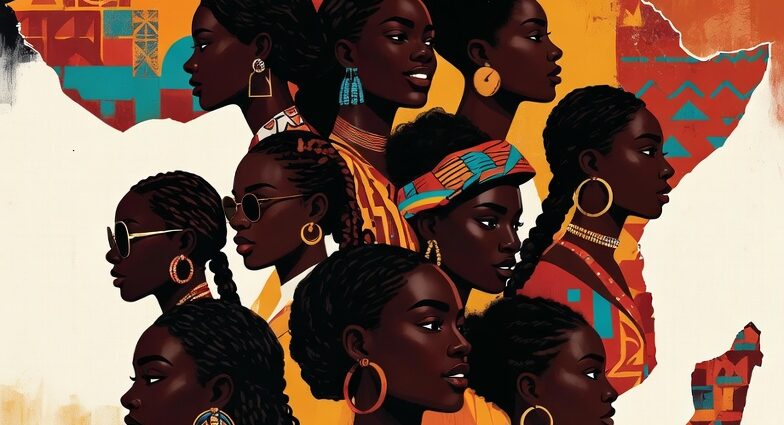
In Africa, the whispers of women are now becoming a roar that can no longer be ignored. For far too long, women’s contributions, ideas, and experiences have been pushed into the shadows, often invisible in political, economic, and cultural spheres. Yet, it is they who shape communities, businesses, schools, and households every day. Recognizing and amplifying their voices is not just a matter of equality—it is an imperative for the social and economic progress of the continent.
African women represent a living, creative force. They are entrepreneurs, artists, teachers, activists, scientists, and community leaders. Each, in her own way, contributes to building a more resilient and innovative Africa. In cities like Lagos, Nairobi, or Dakar, women are launching tech startups that are transforming financial services and access to education. In rural areas, they lead agricultural and healthcare initiatives that support entire communities. Every voice, every initiative, is tangible proof that women’s leadership is not an abstract idea but a reality that changes the lives of millions.
Beyond the visible achievements, there are the less-heard voices—the ones that carry daily experiences, challenges, and hopes of African women. The voices of students striving to complete their education despite economic obstacles, mothers balancing work and home, and activists defending fundamental rights in sometimes hostile contexts. These voices are essential because they reveal both the gaps and the potential of our societies, inspiring solutions rooted in African realities.
The importance of these voices also manifests in culture and collective memory. African literature, music, and cinema are full of women’s testimonies that tell stories differently, with sensitivity and nuance. These cultural expressions are not merely artistic—they shape mindsets, awaken consciousness, and nurture the creativity of a new generation of women ready to take action. By giving women a platform, we enrich African identity, making it more inclusive and representative.
Active participation of women is also a lever for social and economic innovation. Studies show that women-led businesses often perform better, and communities involving women in local decision-making achieve more sustainable progress in health, education, and social cohesion. In Africa, the time has come to stop treating women’s voices as optional and start treating them as essential. Every space where women speak is a step toward equitable and inclusive development.
Yet, amplifying these voices requires collective commitment. Media, institutions, and individuals must create safe and empowering platforms. Young girls need role models, and women must be supported to occupy positions of influence and decision-making. Female solidarity, mentorship, and sharing of experiences are powerful tools to strengthen this movement. The Africa we want to build is one where every woman’s voice matters, where her ideas are heard and transformed into concrete action.
In conclusion, African women’s voices have never been more crucial. They are the driving force behind creativity, leadership, and innovation on the continent. Amplifying these voices inspires positive change, strengthens solidarity among women, and enriches society as a whole. Every time a woman speaks, she opens a door to transformation: of her life, her community, and Africa at large. It is time to listen, support, and celebrate these voices, for they carry the future of the continent.
