
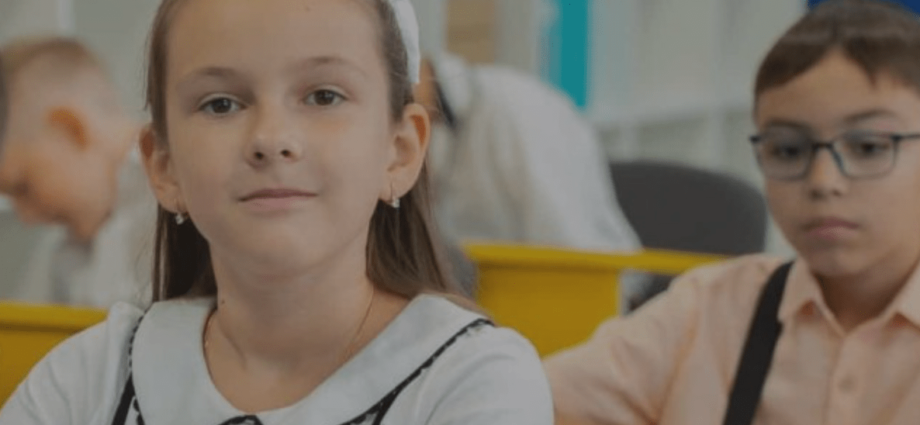
Every day, millions of girls walk through school gates with a dream in mind — to become doctors, nurses, teachers, lawyers, or top athletes. They aspire to a better future not only for themselves but also for their families and communities.
Over the past few decades, access to education for girls has made real progress: higher primary school enrollment rates, improved gender parity, and a 39% reduction in the number of out-of-school girls worldwide.
Yet behind these achievements, inequalities persist. Too many girls are still denied the fundamental right to education, as guaranteed by Article 28 of the Convention on the Rights of the Child.
As the International Day of the Girl approaches — celebrated every year on October 11 — here are 10 key figures on girls’ education.
Girls’ Education: Decades of Progress…
Nearly 9 out of 10 girls worldwide now have access to primary education
A historic breakthrough made possible through joint investments in school infrastructure, innovative initiatives to improve access to primary education, and awareness campaigns highlighting the importance of educating girls.
Thirty years ago, 100 million girls around the world could neither read nor write a simple sentence
Today, that number has been cut in half — a major milestone resulting from improved access to primary education and literacy programs, particularly in rural and marginalized areas.
A better-quality education
372 million
Between 2021 and 2025, 372 million children — 51% of them girls — have benefited from better-quality education in countries supported by the Global Partnership for Education (GPE), the world’s largest fund dedicated exclusively to education in the most vulnerable nations.
…But Major Challenges Remain
Worldwide, 122 million girls are still denied their right to education
Extreme poverty, armed conflicts, climate crises, discrimination, violence, lack of infrastructure, and geographic isolation remain major barriers to their schooling.
Sub-Saharan Africa is the most affected region.
In Benin, for example, more than 35% of children aged 5 to 17 work, making it especially difficult for girls to attend school. In the Couffo department in the southwest, 4 out of 5 girls drop out before completing primary school, and fewer than 1 in 3 manage to finish secondary education.
Globally, 1 in 4 girls does not complete secondary education.
A Learning Crisis
According to estimates, more than 6 out of 10 children worldwide live in “learning poverty” — meaning they are unable to read and understand a simple text by the age of 10.
A Funding Gap
On average, the education sector receives only 3% of total humanitarian aid, even though it is essential for millions of children. By 2026, 6 million children — many of them girls — risk dropping out of school due to cuts in public aid.
Mali, Côte d’Ivoire, the Central African Republic, Somalia, and the State of Palestine are among the most affected countries.
These alarming figures underscore the urgent need for action to ensure that every girl can go to school, reach her full potential, and contribute to her country’s development.
Source : Unicef
